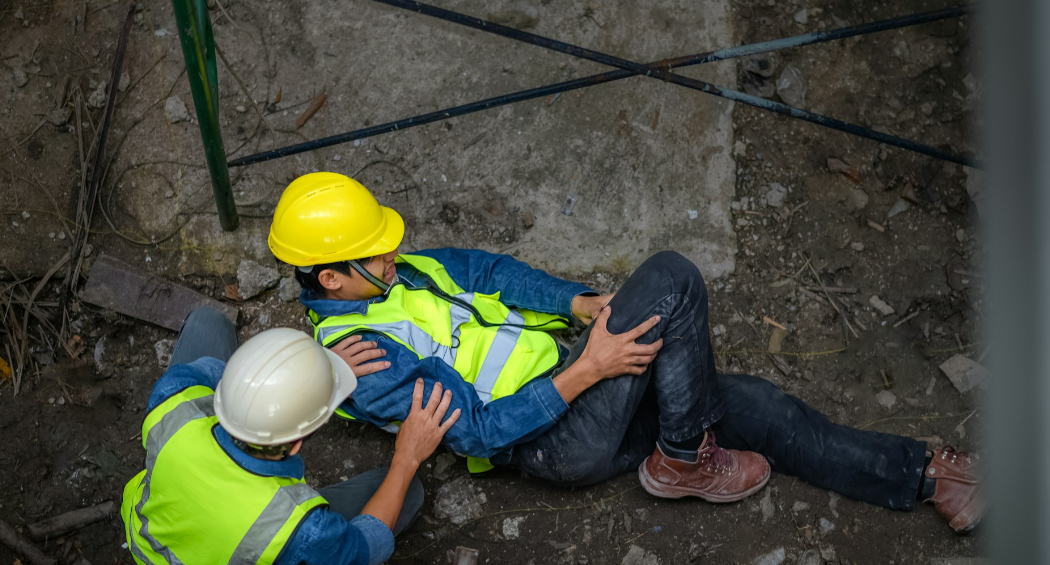
Construction accident claims can involve serious injuries, multiple contractors, overlapping insurance policies, and disputed responsibility. A strong New Jersey construction accident claim is built through prompt investigation, consistent medical documentation, and clear evidence showing who created or controlled the unsafe condition.
The seriousness of an injury alone does not establish liability. The injured worker must connect the accident to the conduct of an employer, contractor, property owner, equipment company, or another responsible party.
Clear Evidence of How the Accident Happened
A successful claim begins with reliable evidence explaining the cause of the incident. Construction accidents may result from:
- Unsafe scaffolds or ladders
- Unprotected floor openings
- Falling tools or materials
- Defective machinery
- Electrical hazards
- Inadequate fall protection
- Poorly maintained equipment
- Unsafe demolition practices
- Failure to coordinate work between contractors
Photographs, surveillance footage, witness statements, incident reports, inspection records, and expert analysis may help establish what went wrong.
Because construction sites change quickly, evidence should be preserved before equipment is moved, hazards are repaired, or video is erased.
Identification of Every Responsible Party
Several companies may operate at the same jobsite. Depending on the facts, responsibility may involve the general contractor, property owner, subcontractor, equipment supplier, maintenance company, architect, engineer, or product manufacturer.
Contracts, work orders, safety plans, daily reports, and testimony from supervisors may show which party controlled the work area or had authority to correct the hazard.
A strong claim does not assume that the injured worker’s direct employer is the only relevant party.
Workers’ Compensation and Third-Party Claims
An employee injured while performing job duties may be eligible for New Jersey workers’ compensation benefits. These benefits can cover authorized medical treatment, temporary disability payments, and compensation for permanent impairment.
Workers’ compensation generally prevents an employee from suing the employer for ordinary negligence. However, the worker may still have a separate personal injury claim against a negligent third party.
For example, a worker employed by one subcontractor may be able to sue another contractor that created an unsafe condition. The workers’ compensation carrier may later have reimbursement rights against part of the third-party recovery.
Strong Medical Documentation
The injured worker should obtain prompt medical treatment and accurately describe how the accident occurred. Medical records should connect the diagnosed injuries to the construction incident.
A strong claim may document:
- Emergency treatment
- Diagnostic imaging
- Surgery and hospitalization
- Physical rehabilitation
- Work restrictions
- Permanent limitations
- Future medical care
Treatment gaps, missed appointments, or inconsistent descriptions may give insurers an opportunity to dispute the claim.
Proof of Financial and Personal Losses
A third-party lawsuit may seek compensation for damages not fully covered by workers’ compensation, including pain and suffering.
Supporting evidence may include medical bills, pay records, tax returns, employer statements, photographs, and testimony about the effect of the injury on daily activities.
When the worker cannot return to the same trade, vocational and economic experts may be needed to calculate reduced future earning capacity.
Credible and Consistent Evidence
Insurance companies compare accident reports, medical records, deposition testimony, employment files, and social media activity. Significant inconsistencies may weaken an otherwise valid claim.
The injured worker should provide accurate information, preserve all relevant documents, follow medical advice, and avoid signing statements that incorrectly describe the accident.
Compliance With Filing Deadlines
New Jersey personal injury lawsuits are generally subject to a two-year statute of limitations. A workers’ compensation claim also has its own filing requirements.
Waiting until a deadline approaches can make the case harder to prove because witnesses may disappear, records may be discarded, and the jobsite may be completely altered.
Speak With a New Jersey Construction Accident Lawyer
A strong construction accident claim combines early evidence preservation, complete medical proof, identification of all responsible parties, and careful coordination between workers’ compensation and third-party rights.
A New Jersey construction accident lawyer can investigate site control, obtain contracts and safety records, preserve physical evidence, retain qualified experts, and calculate the full financial effect of the injury.