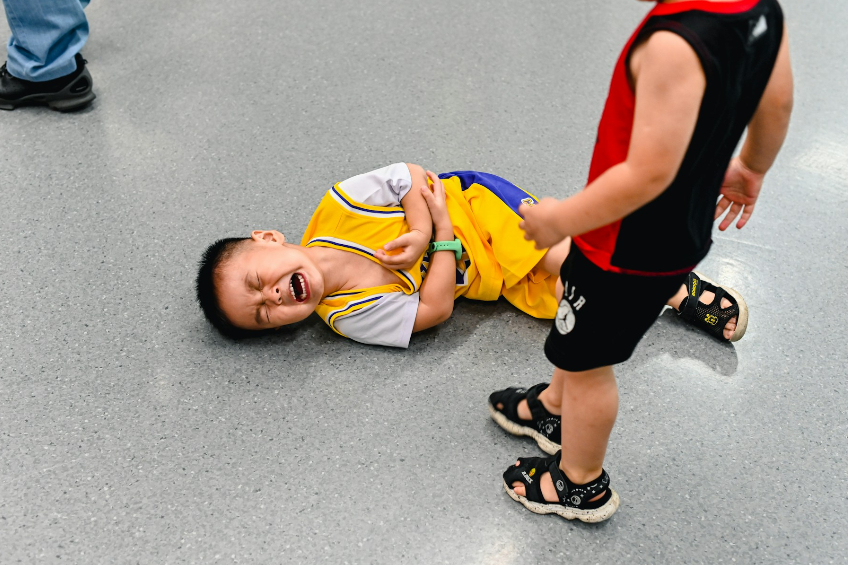
Slip and fall accidents involving children can lead to serious injuries and complex legal questions. In New Jersey, these cases are treated with particular care because minors are not held to the same standards as adults. When a child is injured due to unsafe conditions, parents or guardians may have the right to pursue a legal claim on the child’s behalf.
Why Children’s Cases Are Different
Children are naturally less aware of risks and more likely to act impulsively. For this reason, New Jersey law recognizes that property owners must take extra precautions when it is foreseeable that children may be present. Hazards that might be obvious to adults—such as uneven surfaces or wet floors—may not be recognized by a child.
Courts often evaluate these cases with consideration of the child’s age, maturity, and ability to understand danger. This can affect how liability is determined and whether the property owner took reasonable steps to prevent harm.
Common Causes of Slip and Fall Accidents
Children may be injured in a variety of settings, including schools, playgrounds, retail stores, and residential properties. Common causes of slip and fall incidents include:
- Wet or recently cleaned floors without warning signs
- Icy sidewalks or poorly maintained outdoor areas
- Loose carpeting or uneven flooring
- Unsafe playground equipment
- Poor lighting in hallways or stairwells
In many cases, these hazards could have been corrected or clearly marked to prevent injury.
The Attractive Nuisance Doctrine
A key legal concept in cases involving children is the attractive nuisance doctrine. This principle applies when a property feature is likely to attract children but poses a risk of harm—such as a swimming pool, construction site, or unsecured equipment.
Property owners may be held liable if they fail to take reasonable steps to secure or eliminate such hazards, even if the child entered the property without permission. This reflects the idea that children may not fully appreciate the danger.
Proving Liability
To establish a valid claim, it must generally be shown that a dangerous condition existed, that the responsible party knew or should have known about it, and that it caused the child’s injury. Evidence such as photographs, incident reports, maintenance records, and witness statements can be important.
In cases involving schools or public property, additional procedures and shorter notice deadlines may apply, making prompt action essential.
Compensation for Injured Children
Compensation in these cases may include medical expenses, future treatment costs, pain and suffering, and the long-term impact of the injury on the child’s development and quality of life. Because children may require ongoing care, future damages are often a significant part of the claim.
In New Jersey, settlements involving minors typically require court approval to ensure that the child’s interests are protected.
Comparative Negligence and Children
New Jersey’s comparative negligence rules may apply, but children are not judged by the same standard as adults. Instead, their behavior is evaluated based on what is reasonable for a child of similar age and experience. This often reduces the likelihood that a child will be found significantly at fault.
Time Limits for Filing a Claim
While personal injury claims in New Jersey generally have a two-year statute of limitations, special rules apply to minors. In many cases, the time limit does not begin until the child reaches the age of 18. However, claims brought by parents for medical expenses may still be subject to standard deadlines.
Conclusion
Slip and fall accidents involving children in New Jersey require careful legal analysis and a thorough understanding of how the law protects minors. Property owners have a responsibility to address hazards, particularly when children are likely to be present. When injuries occur, families may have legal options to seek compensation and ensure accountability for unsafe conditions.